Stress Shows on Your Face. Here's What Actually Helps
You don't need a dermatologist to tell you stress shows. You see it after a hard month: skin that looks gray instead of rosy, lines that seem deeper than they did in spring, eyes that look like you slept four hours even when you slept seven. Stress rarely comes from one place. A demanding job, a family worry, grief, caregiving, a relationship that takes more than it gives. Your skin doesn't care about the source. It reacts to the chemistry.
What stress does under the surface
When you're under pressure, your body releases cortisol and adrenaline. In short bursts, that's useful. When the pressure doesn't let up, the effects start to show:
- A weaker barrier. Research has linked psychological stress to slower repair of the skin's protective outer layer. In one study, students' skin barrier recovered measurably more slowly during exams than during calmer weeks. A leaky barrier loses water, looks dull and reacts more easily.
- More inflammation. Chronic stress keeps the immune system on alert, which can mean more redness, flushing and flare-ups of skin conditions you already have.
- Collagen under pressure. Long-term high cortisol is associated with thinner skin, and ongoing inflammation raises the enzymes that break collagen down.
- Tension written on your face. Frowning, clenching and squinting fold the same lines over and over.
Sleep: where your skin does its repair work
Stress and sleep feed each other, and skin is caught in the middle. At night, blood flow to the skin rises and repair picks up. Cut that short night after night and it shows.
In a study at University Hospitals Cleveland Medical Center, women who slept poorly showed more signs of skin aging, such as fine lines and uneven pigmentation, and their skin recovered more slowly from barrier damage and sun exposure than the skin of women who slept well. One late night won't age you. A season of them adds up.
Poor sleep usually shows around the eyes first. Fluid pools when sleep is short or broken, which is why a bad week so often appears as morning puffiness and shadows.
The forgotten factor: dehydration
When life is overwhelming, the basics slip. Coffee replaces water. A glass of wine replaces dinner. Skincare becomes whatever takes ten seconds. Each on its own is minor. Together, they leave skin with less water to hold, and dehydrated skin makes every fine line more visible.
Keep it simple: a glass of water with each cup of coffee, a humidifier if your bedroom is heated, and a moisturizer on the nightstand so you never skip it because you're too tired to walk back to the bathroom.
Small rituals that genuinely help
You can't remove every source of stress. You can give your nervous system, and your skin, regular signals that the emergency is over.
- Breathe out longer than you breathe in. Inhale for four counts and exhale for six to eight, for three minutes. Slow exhales engage the body's calming response.
- Make your evening cleanse a boundary. Washing off the day can mark the end of it. Lukewarm water, a gentle cleanser, no rushing.
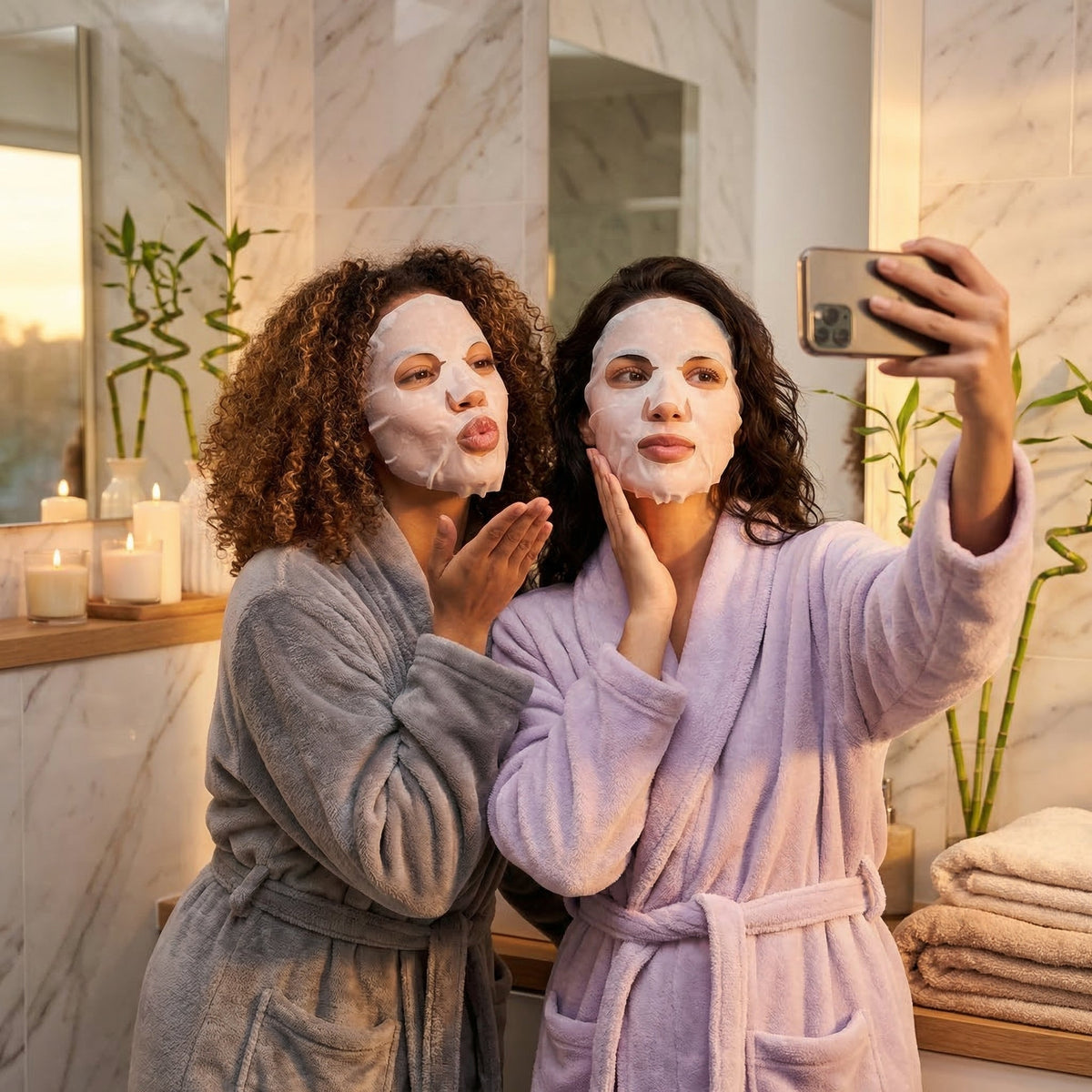
- Lie down with something cool on your face. A hydrogel mask or eye patches give you a reason to stop for half an hour or more. The rest is as valuable as the product.
- Unclench. Check your jaw and forehead a few times a day, and drop your shoulders while you're at it.
- Protect your last hour. Dim lights, screens away, the same bedtime most nights. Consistency matters more than perfection.
- Move, even gently. A 20-minute walk eases tension and gets blood flowing to the skin.
SkinKlean tip: Keep your eye patches in the refrigerator. The cold feels wonderful on tired eyes, and taking them out becomes a cue to sit down, breathe and let the day go.
Be kind to stressed skin
A stressful stretch isn't the moment for a strong peel or five new products. Keep your routine short and gentle, choose fragrance-free formulas if your skin is reacting more than usual, and let hydration carry the load.
If the tired look shows most around your eyes, our Peptide Caffeine De-Puffing Eye Patches were made for exactly those mornings: caffeine, acetyl hexapeptide-8 and 1% niacinamide in a cooling hydrogel you wear for 30 minutes. They won't fix a hard week. They will give you half an hour that belongs only to you.